
Monthly Archives: June 2020

Independence Day Edition of Mullica Hill Money Matters
Welcome to the Independence Day edition of Mullica Hill Money Matters. Its hard to believe we are entering into the first week of July. I think it is also hard to believe how different life remains just a few short months after we first heard the words “Corona Virus”. In true American spirit, I have been proud and encouraged watching how so many have persevered to make the best of a very tough situation. It is that unique perseverance that will allow America to come out on the other side of this current battle victorious.
However, I think it is fair to say that the next few months will likely have a few unexpected fireworks explosions to our economic recovery and investors should be prepared for what this could potentially mean in both the short and intermediate term.
Follow us on Facebook and check in every Wednesday for our latest video.
Our Investment Committee remains cautious regarding our investment allocations. I have said all along that I believed the market has priced in a near perfect recovery that has left no room for disappointment. Last week, as COVID began to surge in states like Florida, California, Texas and Arizona, the market was clearly rattled. Adding an additional concern was seeing states needing to backtrack and even halt their re-opening plans. You see, the market is not concerned with the virus itself but rather how its continued presence will hamper the US economic recovery. On Friday, we watched as the S&P 500 closed below its 200 moving day average. The 200-day SMA, which covers roughly 40 weeks of trading, is commonly used in stock trading to determine the general market trend. If a stock price remains above the 200-day SMA on the daily time frame, the stock is generally considered to be in an overall uptrend. It was able to reclaim its position above on Monday but a second decline below could show signs of increasing weakness of the index. The Dow Jones Index also showed concerning signs of weakness as it closed just a few points above 25,000 with Friday’s sell off. If the economic recovery continues to stall, this will likely disappoint investors.
We also continue in our belief that the market is significantly overvalued compared to its P/E (Price to Earnings) ratios. While it is true that the stock market is not the economy, it is directly tied to corporate earnings. Right now however, the market seems to be detached from this fact. It is interesting that as we went into 2020, the S&P 500 was pricing in earnings at $160 per share. We are currently pricing in earnings of $180 per share. That is a serious disconnect considering what we know about our current earnings. The only way to rectify this will be for earnings to come up or stock valuations to come down. The Atlanta Federal Reserve is estimating Q2 corporate earnings to come in at a historic negative 47%. History shows us that it is always valuations that wind up trending down when the market becomes this disconnected. The S&P 500 is also severely overconcentrated as about 25% of its performance has come from 5 stocks. We have not seen concentrations like this since the 70s and it points to weakness in the rest of the index. The Buffet indicator is currently showing a market overvaluation of 145.7%. The last time stocks were this overvalued was right before the Dot Com Bubble burst. Its no wonder why Warren Buffet is currently sitting on 137 BILLION dollars in cash right now.
Simply put, the market is currently full of greed and emotion. As investment managers, it is important we remain unemotional as we make investment decision for our client. Most investment mistakes happen because we allow our emotions to get in the way. As such, we choose to remain committed to using our math and rules-based process to steer our next steps. Currently, our program continues to recommend using defensive investment allocations. As such, we are using a mix of cash and fixed income options for our individual investors. We will remain there until we are given additional reassurance that the equity market risk no longer out weighs the potential reward. We are interested in investing in the areas of greatest potential, taking risk into account. When our indicators turn, we will concentrate in the areas showing greatest strength while avoiding weaker areas. This allows us to avoid areas that would drag down our performance.
We are looking forward to the coming months as we can hopefully prepare to round the corner of this historic time. We just need to remain prudent and patient as we have concerns there are a few more unexpected fireworks that have yet to appear. As the famous investor Charlie Munger once said, “the big money isn’t in the buying and the selling but the waiting.” Victory Wealth Partners wishes you a very happy Independence Day and continued health and safety for you and your family.
 Ashley Rosser, President
Prior to her career in the financial services industry, Ashley earned her Bachelor of Science in Nursing from Cedarville University.
Ashley decided to make a career change from her ten years within the healthcare industry as a pediatric emergency room nurse to retirement and 401K investment planning. She joined Victory Wealth Partners in 2008 after obtaining her Series 65 professional financial license and went on to earn her AIF (Accredited Investment Fiduciary) professional designation from the Center for Fiduciary Studies.
Is the New Bull Market Here?
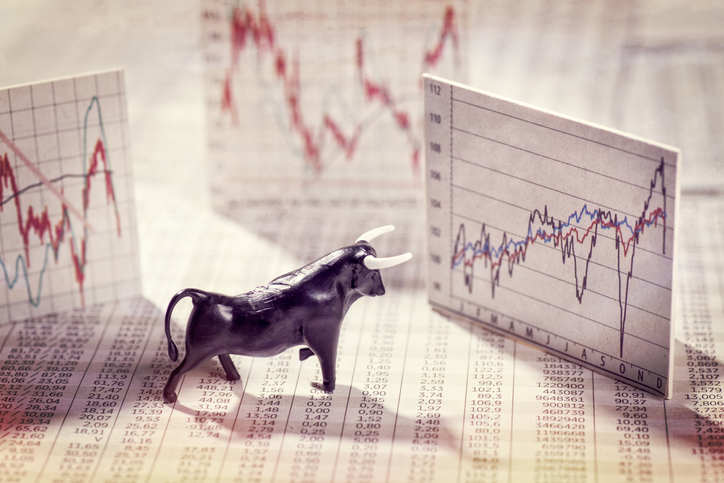
Since my last time with you, a lot has happened regarding the stock market and much of that on the surface does appear to be bullish. Bullish simply means that the stock market is rising and is expected to continue rising. We have seen the stock market make an unbelievable rebound since its market lows on March 23rd. Last week we finally saw the S&P 500 break through the 200 moving day average after weeks of stagnation. As a result, many are asking “ is the bull back and is it now a buyer’s market?” Based upon what we see and know, I would say not quite yet.
I want to spend some time to help you understand where we are regarding the economy and the stock market and how that could potentially impact us in the short run. There seems to be a significant disconnect between the stock market and reality. The stock market is significantly overvalued currently. The P/E (Price to earnings) ratio of the S&P500 at the end of 2019 was $140. This measures the value of the index versus its earnings. Current P/E ratios stand at $182. This means the market is overvalued today compared to December. Normal PE ratios are around 116. Seems hard to believe when we think about where current corporate earnings stand. Eventually, this disparity will need to be reconciled and for that to happen, earnings must increase or values must decrease. Increase in corporate earnings in the short run seems unlikely, so we know the alternative.
Market index performance is also extremely concentrated. There are 5 stocks who are responsible for 20% of the overall return. This indicates weakness among the vast majority of the other companies that comprise the index. The last time we saw indexes this concentrated was in the 70s.
Weakness is also apparent in the overall economy. Q2 GDP is estimated to fall to -30%. Currently, over 40 million Americans have filed for unemployment during the pandemic. Goldman Sachs predicts we could see unemployment numbers of up to 25%. Federal Reserve Chairman Jerome Powell has said that 40 percent of U.S. households earning less than $40,000 a year lost their jobs in March. A May 15th article from the University of Chicago (Becker Friedman Institute) cited that 42% of recent layoffs will result in permanent job loss. It is nearly impossible to wrap our heads around what these numbers mean and what the impact will be on our country’s economy. We also believe this is not the end of the bad news, but rather the beginning as the impact of the shutdown is just now starting to be understood.
So, what gives? Despite all we know currently, and what we are expected to see in the future, why does the market continue to ignore all the bad news and just keep climbing? I believe the market is currently “riding on hope”. It is pricing in an absolute best case scenario that involves America quickly getting fully back to work, recovering lost earnings, GDP rapidly rising, having a vaccine by end of the year, and that there will be no secondary COVID-19 surges. Essentially, we have priced in a perfect recovery story, leaving no room for disappointment. There is a current disconnect between what investors expect and what is reality. We simply cannot continue to completely ignore the current technical and fundamentals of the market forever. Long term analysis shows us that eventually these matters will have to reconcile. When that happens, the market could have their day of reckoning.
What does this mean for investors? Our investment committee, has decided to begin taking fixed income positions inside our portfolios very shortly. Our relative strength indicator is now showing there is a good opportunity in this space. However, we believe that the risk remains higher than the potential reward and believe the better opportunity to increase equity risk will come later this summer. We will continue to follow our math and rules-based program to guide our investment decision making process. We are hopeful that we will soon begin to re-enter the equity market tactically. We will include asset classes and sectors that show positive relative strength and believe there will be tremendous opportunity when that happens. We just are not quite there yet. We continue to choose safety for our clients as hope alone is not a prudent investment strategy. As Charlie Munger once said “The big money isn’t made in the buying and selling but in the waiting.”
If you would like to follow our weekly video series where Ashley will be discussing the current market and pertinent economic updates, please follow us on Facebook. Please stay well and if you have questions about your current portfolio mix given these extraordinary times, we would love to have a conversation with you.
Be Well,
Ashley Rosser AIF BSN