
Monthly Archives: May 2023

June 2023: Threat of Recession Still Looms
Is the worst over for the financial markets? As you recall, 2022 was a year marked by steep declines across both the equity and bond markets. Bonds, which are typically used as a “safe haven”, had their biggest drawdown since 1786. The S&P 500 declined over 18% for the same period. High inflation and aggressive rate hikes combined with tightening monetary policy led to decreased economic growth and steep declines across the broad-based markets. However, since October, we have seen a strong rebound off the bottom. Currently, the biggest debate among financial analysts lies between whether an economic recession is avoidable.
There are three main debates. Those concerned about debt increases, surging interest rates, and a reversal of stimulus believe that a “hard recession” is inevitable. Some see the higher equity prices and believe that “no recession” is likely and earnings will begin to rise again. Finally, some believe there is the possibility of a “soft recession,” where the economy does slow but does NOT lead to a sharp increase in unemployment or a dramatic decline in equity prices.
No one knows which of these will play out as there is fair evidence for each of them. Investors can only take the information available to them and decide how much risk they are willing to take on as a result. I do know that the stock market tends to be forward looking. Technically, markets now have a confirmed breakout from the October lows meaning there is certainly now the possibility of markets going higher. Fundamentally, earnings are expected to grow rapidly through the end of 2023 and break above the 2022 peak. Both are notches in the belt for the bulls in the crowd. However, sticky inflation, high interest rates and threats of economic slowdown still exist and shouldn’t be dismissed.
Bonds have also been the center of discussion lately. After their disastrous performance last year, investors may feel less confident in their ability to be used to decrease portfolio volatility. However, the current environment does give support for bonds to be set up for positive returns. Bonds have an inverse relationship with interest rates. When interest rates are rising, bonds will be affected negatively. An obvious example of this was what happened in 2022. If the Federal Reserve does begin to cut rates later in the year, bond values will go up. Bonds are also significantly oversold, adding to the argument that it may be time to consider adding them back to portfolios soon. In fact, if we do proceed into a recession, bonds have an opportunity to not just act as a hedge in portfolios but could outperform equities by a considerable margin.
For now, we continue to tread cautiously. While we remain fully invested, we are cognizant of the risks that remain, and our portfolios are constructed accordingly. If you have any questions about the current market conditions or would like a second opinion of your current allocations, please give us a call. We are always here to help.
 ASHLEY ROSSER, PRESIDENT
Prior to her career in the financial services industry, Ashley earned her Bachelor of Science in Nursing from Cedarville University.
Ashley decided to make a career change from her ten years within the healthcare industry as a pediatric emergency room nurse to retirement and 401K investment planning. She joined Victory Wealth Partners in 2008 after obtaining her Series 65 professional financial license and went on to earn her AIF (Accredited Investment Fiduciary) professional designation from the Center for Fiduciary Studies.
May 2023 Market Prediction: Buy, Sell or Stay
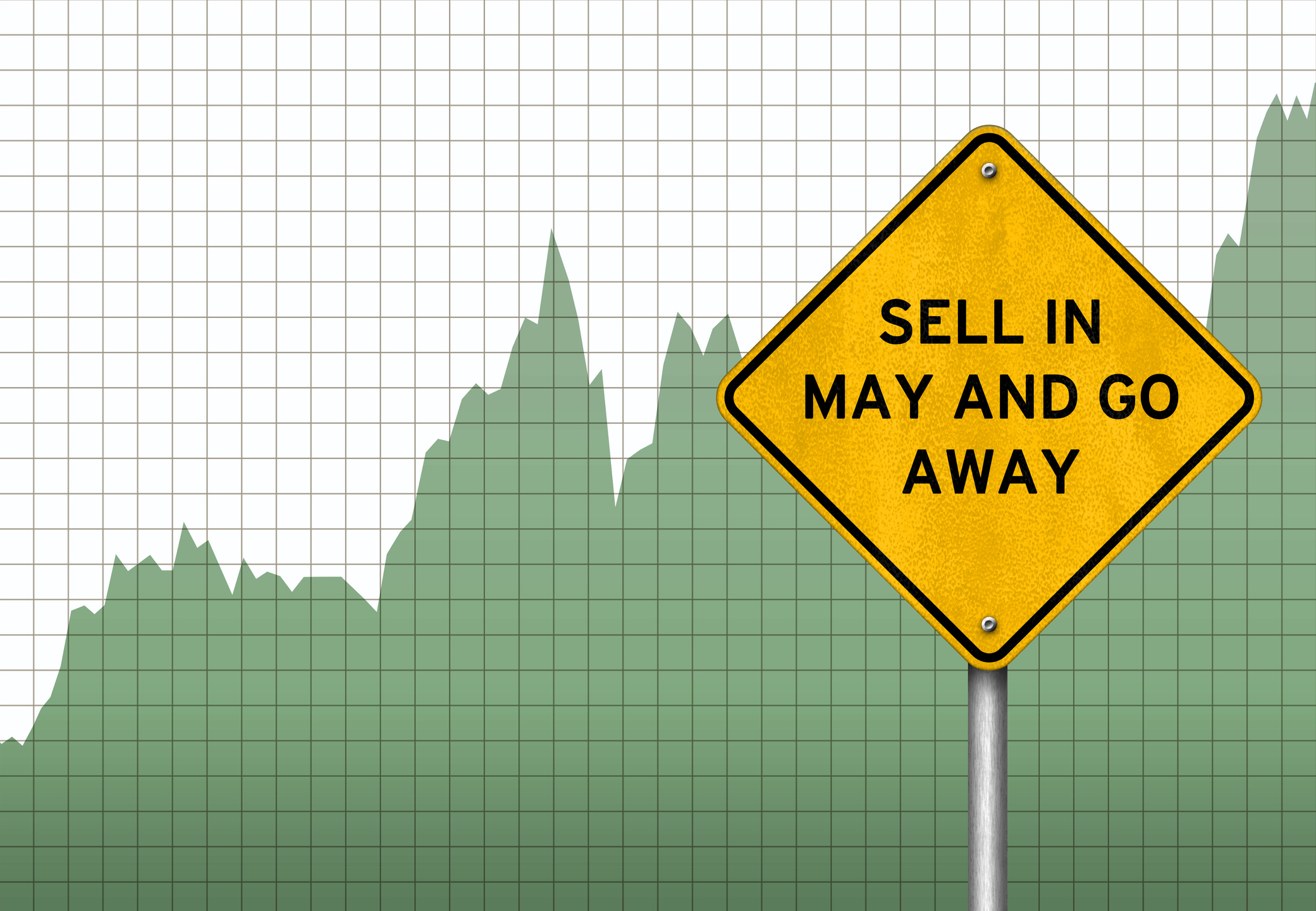
“Sell in May and go away” is an adage that you may hear each year around this time. It suggests it would be beneficial for investors to go on vacation from their portfolios starting in May and not returning until November. Some historical analysis suggests the summer months of the market tend to be the weakest of the year. Since 1990, the S&P 500 has gained an average of about 2% from May through October. That compares with a roughly 7% average gain from November through April.
However, there are plenty of times this strategy would not have paid off. Stocks tend to record gains throughout the year, on average, so selling in May generally doesn’t make a lot of sense. Stocks have still grown on average even during this historically slower period, with the S&P 500 up around 65% of the time. History suggests the opportunity cost of periodically exiting and reentering the market may be significant. It’s extremely hard to time the market consistently.
There are plenty of reasons to consider caution as we head into May. The Federal Reserve is expected to raise rates another 25 bps this week. The question remains what their next moves will be. Core CPI numbers (inflation measures minus food and energy) continue to be sticky. However, cracks in the overall economy from cumulative rate hikes are appearing. There are signs of job market softening as continuing unemployment claims are elevated. We have also seen obvious stress on financial institutions and there is concern that after math contamination could spread to other banks. Economic slowdown risk remains elevated. This certainly leaves the Federal Reserve in a challenging position.
The current environment leaves investors also wondering what to do next. This could be a good time to steer portfolios to areas of strength and momentum and away from the areas that are dragging. As we always say, “let your winners run and cut your losers quick”. I expect the Federal Reserve to at least pause further rate hikes for the time being. If that occurs, we could see some rotations in both the equity and bond markets. Areas of quality companies in equities historically have performed better after a rate hike pause and reversal. In the bond markets, we could see a move to longer duration high quality companies and out of the ultrashort areas that have been outperforming recently. We will just have to see if history repeats itself.
There is certainly a lot of uncertainty for markets as we head into summer, but I still don’t think you need to go on vacation with your investments this May. You certainly want to make sure you have a clear set of investment rules you are following. Your portfolio allocations should each have an identifiable role in your overall strategy and it’s ok to fire them if they stop fulfilling those roles. As always, if you have questions about your current portfolio allocations, we are always happy to discuss them with you. Until then, we wish you the very best and look forward to being back in June!
ASHLEY ROSSER, PRESIDENT
Prior to her career in the financial services industry, Ashley earned her Bachelor of Science in Nursing from Cedarville University.
Ashley decided to make a career change from her ten years within the healthcare industry as a pediatric emergency room nurse to retirement and 401K investment planning. She joined Victory Wealth Partners in 2008 after obtaining her Series 65 professional financial license and went on to earn her AIF (Accredited Investment Fiduciary) professional designation from the Center for Fiduciary Studies.